
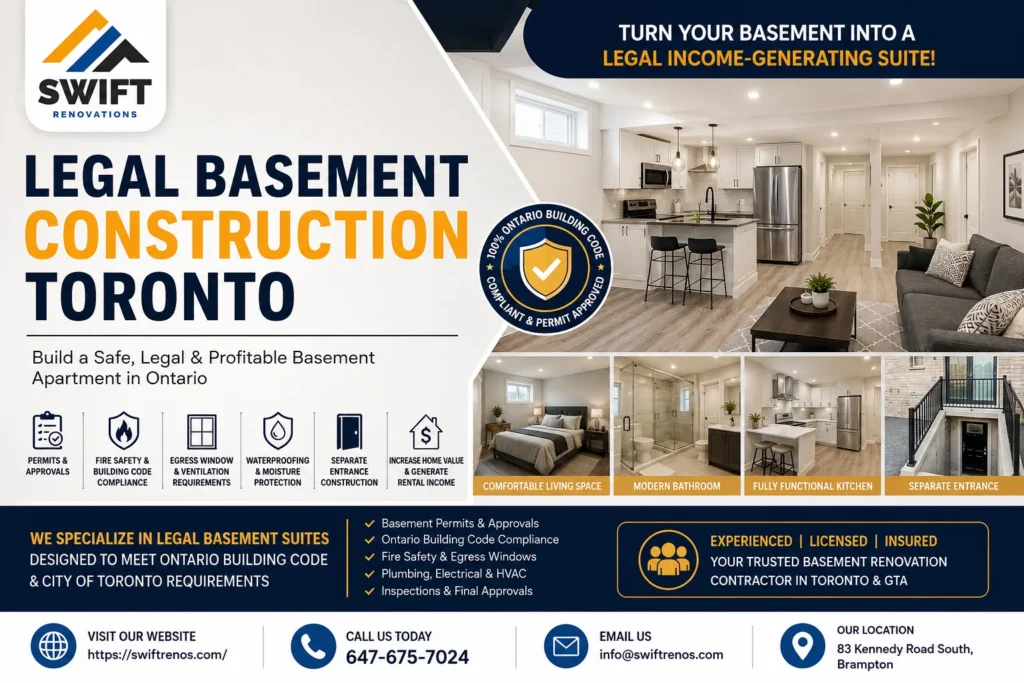
Creating a legal basement apartment is one of the smartest ways homeowners can increase property value and generate rental income in Toronto. Whether you want extra living space for family or plan to build a legal rental unit, understanding the rules, permits, and construction process is essential.
Legal basement construction Toronto projects must follow Ontario building regulations, fire safety basement codes, zoning bylaws, and permit requirements. A properly designed basement apartment not only protects your investment but also ensures tenant safety and long-term compliance.
In this guide, you will learn how to build a legal basement in Toronto, estimated costs, permit requirements, design ideas, and how to choose the best legal basement contractor in Toronto.
Why Homeowners Are Investing in Legal Basement Construction
Toronto’s housing market continues to grow, and many homeowners are turning unused basements into profitable secondary suites. A finished basement can provide:
- Monthly rental income
- Increased home value
- Multi-generational living space
- Better use of unused square footage
- Improved resale appeal
A legal basement suite Ontario homeowners build correctly can become a long-term financial asset while meeting all safety and licensing standards.
What Is a Legal Basement Apartment?
A legal basement apartment is a self-contained secondary dwelling unit that complies with:
- Ontario Building Code
- Toronto zoning bylaws
- Fire code requirements
- Electrical and plumbing regulations
- Basement permit Toronto approvals
To qualify as a legal secondary dwelling unit, the basement must include:
| Requirement | Details |
|---|---|
| Separate Entrance | Safe and accessible entry |
| Egress Window | Emergency escape access |
| Fire Separation | Fire-rated walls and doors |
| Proper Ceiling Height | Meets Ontario code |
| Ventilation | HVAC and airflow compliance |
| Plumbing & Electrical | Licensed installation |
| Smoke & CO Alarms | Required safety systems |
Without these requirements, the unit may be considered illegal and could lead to fines or removal orders.
How to Build a Legal Basement in Toronto
1. Check Zoning and Property Eligibility
Before starting basement construction Toronto projects, verify whether your property qualifies for a secondary suite.
Key factors include:
- Property zoning
- Lot size
- Parking requirements
- Existing home layout
- Separate basement entrance possibilities
A licensed renovation contractor can help assess feasibility before construction begins.
2. Apply for Basement Permits
Basement permits are mandatory in Toronto for:
- Structural changes
- Plumbing installation
- Electrical work
- Separate entrances
- Basement apartment conversion
The basement apartment permit Toronto guide typically includes:
- Architectural drawings
- HVAC plans
- Fire safety details
- Structural engineering (if required)
- Permit submission to the city
Working without permits can delay future home sales and create legal complications.
3. Meet Ontario Building Code Requirements
Legal basement requirements in Ontario focus heavily on safety and habitability.
Basement Fire Code Requirements Toronto
Your legal basement apartment must include:
- Fire-rated drywall assemblies
- Interconnected smoke alarms
- Carbon monoxide detectors
- Fire separation between units
- Safe exits
Fire safety basement compliance is one of the most important parts of legal basement renovation Toronto projects.
4. Install Proper Egress Windows
Basement egress window requirements Ontario regulations ensure tenants can safely exit during emergencies.
The window must:
- Open fully without tools
- Meet minimum opening dimensions
- Be easily accessible
- Provide direct emergency escape
Modern legal basement design ideas often incorporate larger windows to improve natural lighting while meeting code.
5. Complete Plumbing and Electrical Work
Professional basement plumbing installation is critical for kitchens, bathrooms, and laundry areas.
A proper basement plumbing system includes:
- Drainage planning
- Backwater valves
- Sump pumps where necessary
- Water line installation
Electrical systems must comply with Ontario safety standards and should only be completed by licensed professionals.
Legal Basement Construction Cost in Toronto
One of the most common homeowner questions is: how much does legal basement construction cost?
The total price depends on:
- Basement size
- Structural upgrades
- Separate entrance construction
- Waterproofing
- Plumbing and electrical complexity
- Finishing quality
Average Basement Construction Cost
| Service | Estimated Cost |
|---|---|
| Basic Basement Finishing | $35,000 – $55,000 |
| Legal Basement Apartment | $60,000 – $120,000+ |
| Separate Entrance | $8,000 – $20,000 |
| Basement Underpinning | $20,000 – $50,000 |
| Waterproofing | $5,000 – $15,000 |
Affordable basement construction Toronto companies may offer financing or phased renovation plans.
Basement Waterproofing Toronto: Why It Matters
Moisture protection is essential before any basement finishing Toronto project begins.
Ignoring water issues can lead to:
- Mold growth
- Structural damage
- Flooring failure
- Poor indoor air quality
Basement waterproofing Toronto services often include:
- Interior drainage systems
- Foundation sealing
- Sump pump installation
- Vapor barriers
- Basement insulation improvements
Energy-efficient basement construction also helps reduce heating costs and improve comfort.
Basement Layout Ideas for Rental Income
Smart basement layout ideas improve functionality and rental appeal.
Popular Basement Apartment Features
Open Concept Living Area
Creates a spacious feel in smaller units.
Modern Kitchen Design
Compact kitchens with storage maximize usability.
Soundproofing Between Floors
Basement soundproofing improves tenant privacy and comfort.
Separate Laundry Area
Adds convenience and rental value.
Large Windows and Lighting
Makes the basement feel brighter and more welcoming.
Custom basement construction allows homeowners to tailor the unit for long-term tenants or short-term rental potential.
Basement Underpinning and Legal Renovation
Some older Toronto homes require underpinning to meet legal basement height requirements.
Underpinning involves lowering the basement floor to:
- Increase ceiling height
- Improve structural stability
- Add usable living space
Although expensive, basement underpinning and legal renovation projects significantly improve property value and rental potential.
Choosing the Best Legal Basement Contractor in Toronto
Hiring an experienced basement renovation contractor is critical for a successful project.
What to Look For
- Licensed and insured company
- Experience with legal basement construction
- Knowledge of Toronto renovation permits
- Strong client reviews
- Transparent pricing
- Portfolio of finished basement projects
The best legal basement contractor in Toronto will guide you through permits, inspections, design, and construction from start to finish.
Legal Basement Apartment Inspection Checklist
Before final approval, inspectors typically review:
- Fire safety systems
- Ceiling heights
- Egress windows
- Electrical installations
- Plumbing systems
- Ventilation
- Separate entrance safety
- Smoke and carbon monoxide alarms
Passing inspection ensures your legal rental unit complies with all Ontario building regulations.
Benefits of a Legal Basement Suite
Rental Income Potential
A legal basement apartment can generate substantial monthly cash flow in Toronto’s competitive rental market.
Increased Property Value
Homes with legal secondary suites often sell for higher prices.
Flexible Living Arrangements
Perfect for extended family, adult children, or aging parents.
Future-Proof Investment
Legal compliance protects homeowners from fines and future legal issues.
Common Mistakes to Avoid
Many homeowners make costly errors during basement remodeling Toronto projects.
Avoid:
- Starting work without permits
- Hiring unlicensed contractors
- Ignoring waterproofing
- Poor ventilation planning
- Inadequate soundproofing
- Non-compliant electrical systems
Professional planning prevents expensive corrections later.
FAQ’S:
How much does legal basement construction cost in Toronto?
Most legal basement construction Toronto projects range from $60,000 to $120,000 depending on size, finishes, and structural requirements.
Do I need a permit for basement renovation in Toronto?
Yes. Basement permits are required for structural work, plumbing, electrical upgrades, and legal basement apartment construction.
What makes a basement apartment legal in Ontario?
A legal basement suite Ontario property must meet building code, fire safety, zoning, and permit requirements.
How long does legal basement construction take?
Most projects take 6–12 weeks depending on complexity and permit approvals.
Can I build a separate entrance for my basement?
Yes, but it must meet legal basement entrance requirements Ontario regulations and receive permit approval.
Is basement waterproofing necessary?
Absolutely. Basement moisture protection prevents mold, water damage, and future structural issues.
What are egress window requirements in Ontario?
Basement egress windows must meet minimum size and accessibility standards for emergency escape.
Can a legal basement increase home value?
Yes. A finished basement construction services Toronto project can significantly improve resale value and rental potential.
Conclusion
A legal basement construction Toronto project is one of the best investments homeowners can make for long-term value and rental income. However, building a compliant basement apartment requires careful planning, permits, fire safety compliance, and professional workmanship.
From basement waterproofing and plumbing installation to inspections and Ontario building code approvals, every step matters. Working with a licensed basement contractor Toronto homeowners trust can help ensure your project is safe, profitable, and fully legal.
Whether you are planning a basement conversion Toronto project for family use or rental income renovation Toronto purposes, investing in a professionally built legal basement suite can deliver lasting financial and lifestyle benefits.